Blog

Switching Business Electricity Suppliers: Steps, Fees, and Timing

The renewal letter from your electricity supplier tells you when your contract ends. Ignore it and your business either rolls onto a rate nobody compares or mistakenly pays a fee to leave a contract early.

Switching business electricity suppliers is mostly paperwork your new supplier handles. What it costs depends on when you switch and what your contract says about leaving early. Below, you’ll find which rules cover your account in Texas, Ohio, or Pennsylvania, the seven steps to switch, and the math that shows whether an exit fee is worth paying.

Read More about Switching Business Electricity Suppliers: Steps, Fees, and Timing

Is Prepaid Electricity Cheaper? What Paying First Costs You in Texas

Is prepaid electricity cheaper? Usually no. We priced a Houston prepaid plan against a competitive basic fixed-rate plan, from electricity facts labels dated October 4 and November 19, 2026, and the prepaid plan cost $76.41 more at 1,000 kWh (plus taxes and fees) for a single month of usage.

Over a year in an average CenterPoint home, prepaid costs $997.50 more, and a deposit on a regular plan is refunded with interest after 12 on-time bills. We’ve reviewed thousands of Texas electricity plans and bills since 2017. Below, you’ll see when prepaid makes sense, what a deposit really costs, and how to price both at your usage.

Read More about Is Prepaid Electricity Cheaper? What Paying First Costs You in Texas

Survey Finding: Most Texans Misread Electricity Rates and Pay More for Power

In a November 2026 survey of 600 Texas electricity bill-payers, only 3.2% correctly answered two basic questions about how plan pricing works. Complex Texas electricity plans can include bill credits, usage thresholds and monthly fees, with advertised prices that are only accurate at a specific usage level. Unfortunately, most people choose their electricity plan based on the advertised price, and ending up on electricity plans that could cost them more over the course of a year.

Read More about Survey Finding: Most Texans Misread Electricity Rates and Pay More for Power

How to Set Up Electricity in a New Apartment in Texas

Here is how to set up electricity in a new apartment in most of Texas: confirm the unit has its own meter, enroll with a Retail Electric Provider (REP) as a move-in, and send the confirmation to your leasing office.

But the electricity plan you pick needs some analysis. Plans usually advertise their 1,000 kWh price, yet a Texas apartment under 1,000 square feet uses about 720 kWh a month, based on data from Energy Information Administration (EIA) data. We’ve reviewed thousands of Texas plans and bills, and below we show what that gap costs.

Read More about How to Set Up Electricity in a New Apartment in Texas

How to Compare Texas Electricity Rates by Usage (3 Ways, 2026)

To compare Texas electricity rates by usage, price every plan against your own 12-month kWh usage, not the advertised 1,000 kWh benchmark. Calculating each plan’s true monthly bill requires factoring in all charges from the Electricity Facts Label (EFL) including base charges, energy rates, bill credits, and TDU delivery fees to find what you’ll actually pay.

You can compare plans using three methods:

  1. Use PowertoChoose plus a spreadsheet to calculate every plan for your usage.
  2. Use ElectricityPlans’ free BillSmart™ Low Bill Finder; it runs the math on all your options to find the cheapest plan based on your usage.
  3. Or hand over your personal information to a paid concierge, pay them over $100 and have them pick a plan for you.

Read More about How to Compare Texas Electricity Rates by Usage (3 Ways, 2026)

Average Electricity Cost for Small Business: What You’ll Pay

The average electricity cost for small business accounts starts at 14.04¢ per kWh, the U.S. commercial average for January through August 2026, according to the federal Energy Information Administration (EIA). At that price, average commercial usage costs about $899.44 a month (plus taxes and fees).

Don’t budget off either number. Both blend corner shops with office towers, hiding the two things that set your bill: how many kWh you use, and how hard you pull power at your busiest moment. Below, we estimate costs by business type in Texas, Ohio, and Pennsylvania, then show the demand math.

Read More about Average Electricity Cost for Small Business: What You’ll Pay

Understanding Home Battery Backup Systems – Sizing & Cost

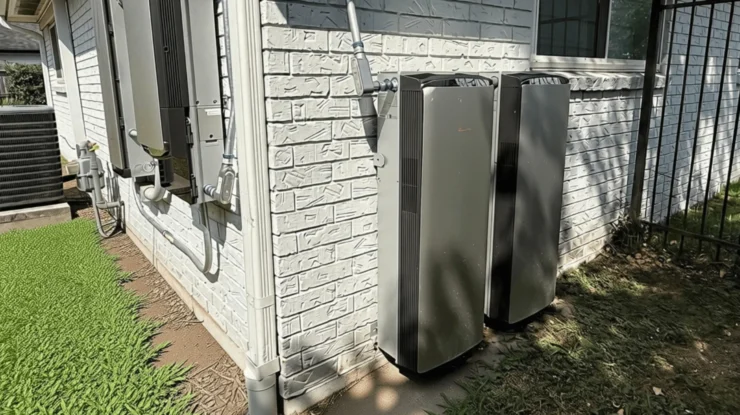
After frequent power outages at your home, you’re probably frustrated and ready to do something to keep your home operating regardless of grid conditions. New technology makes home battery backup a solid alternative to a whole home generator.

In this article we review what a battery backup system is, how to determine the size of battery you need, and the subscription model for home battery backup systems that makes it truly affordable.

Read More about Understanding Home Battery Backup Systems – Sizing & Cost

Generator vs. Home Battery Backup: A Decision Guide

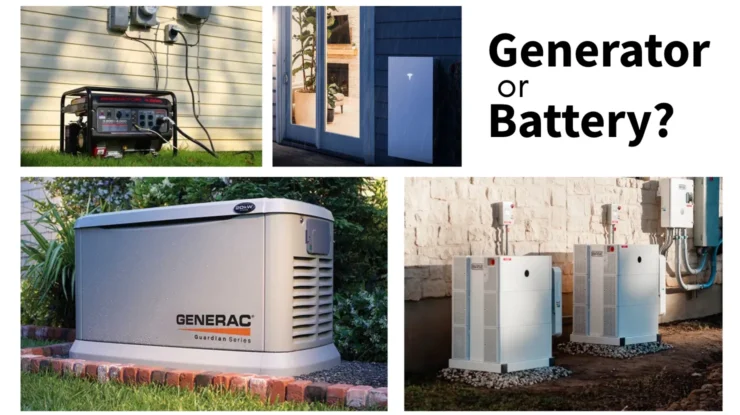
A whole-home standby generator can run for days but costs around $18,000-$20,000. A portable generator is the cheapest way to keep essentials running, but it takes the most work and carries a risk of carbon monoxide poisoning if not managed properly. A home battery is silent, switches over instantly, and covers a typical one-day outage. Plus the newest version of home battery backup comes with a low upfront installation and a subscription fee.

The right pick depends on how long a typical outage lasts in your area, what you need to keep running, and what you can spend.

Read More about Generator vs. Home Battery Backup: A Decision Guide

We just need your ZIP code

To show you the right plan, please enter your ZIP code below

Needed to confirm your meter's eligibility for business rates Please enter a valid Commercial Service Address or ESID to proceed