
In deregulated areas of Texas, home battery programs operate under a subscription model.
What is a home battery backup subscription? Instead of requiring $10,000–$20,000 upfront to buy and install hardware, your retail electricity provider (REP) will install a whole home battery backup system, giving you backup power for up to 36 hours depending on your battery configuration and electricity consumption. In exchange, you enroll in their fixed rate electricity plan. They charge your battery when prices are low. They use that to power your home and they sell excess battery capacity back into the grid during peak market demand.
TL;DR Our recommendation for best home battery backup + energy is Energywell. That’s based on no application fee, no installation fee, and a low energy rate. Visit their site to enroll or call 844-815-4462.

Energywell
- $0 installation fee
- 20 and 40 kWh options
- 15 year battery agreement
- $19 monthly fee
- 4.2¢ energy rate for 1 year*
- $0 application fee
- Up to $250 ETF reimbursement
Home Battery Backup Lease – Understanding the Texas Battery Subscription Model
Base Power Company, Energywell, Tesla Electric and Octopus Energy are the four Texas electricity companies that offer a home battery subscription model (battery + energy) in Texas. You’ll get a battery backup for your home and electricity from them as your Retail Electricity Provider. In return, you’ll opt in to their Texas VPP program (virtual power plant), allowing them to discharge your battery onto the grid.
Understanding a Battery + Energy Contract
With a home battery backup subscription, you’ll have two contracts:
- Electricity Plan Contract
- Battery Lease Agreement
Your electricity plan is a 1-3 year contract term, usually offering lower than average electricity rates. You’ll pay a monthly fee, plus a fixed rate for electricity with delivery charges passed through at cost.
Your battery lease agreement will have a 10-15 year term. You may pay an upfront installation fee that covers the electrician, installation and permitting, though some programs charge no installation fee. You’ll be required to stay with the designated retail electricity provider for the length of the battery lease agreement. If you switch REPs, you will lose access the battery, pay an uninstall fee of $500-$1000 plus any early termination fee (ETF) from the electricity contract.
Your battery lease agreement is 10-15 years. Your electricity plan contract is for 1-3 years. Does that mean they’re going to rip you off on the renewal offer for your power price? No. Your electricity plan renewal offer will be spelled out in your battery lease agreement. For example, most state the renewal offer will meet or beat the lowest price for a similar term fixed rate plan on the Power to Choose. That gives you peace of mind when you enter the battery agreement.
How to Enroll in a Battery Backup + Energy Program
To start the process, you’ll complete an application including a soft-hit credit check, similar to any electricity sign-up in Texas. Then, you’ll upload photographs of your home showing the meter location and your electrical breaker box, so they can confirm adequate clearance from gas meters, HVAC and any other obstructions. Once approved, they’ll apply for city permitting and schedule installation.
🏆Best Home Battery Backup Program in Texas: Our recommended home battery backup program is Energywell. That’s based on no application fee, no installation fee, and a low energy rate.
Energywell
- $0 installation fee
- 20 and 40 kWh options
- 15 year battery agreement
- $19 monthly fee
- 4.2¢ energy rate for 1 year*
- $0 application fee
- Up to $250 ETF reimbursement

Base Power Company
- $695 installation fee
- 25, 39.2, 50 kWh options
- 12 year battery agreement
- $19 monthly fee
- 7.7¢ energy rate for 3 years
- $50 refundable deposit
- Up to $150 ETF reimbursement

Octopus PowerStore
- $0 installation fee
- 30 kWh battery
- 10 year battery agreement
- $45 monthly fee
- 8¢ energy rate for 3 years
- $0 deposit
- No ETF reimbursement

Tesla Electric
- $100 installation fee
- 27 kWh (2 batteries)
- 12 year battery agreement
- $35 monthly fee**
- 8¢ energy rate for 1 year
- $0 deposit
- No ETF reimbursement
* Energywell 4.2¢ energy rate in Oncor, 4.4¢ energy rate in CenterPoint. Information current as of 11/5/2026.
** Tesla Electric 2 Powerwall battery lease for 12 years at $122/month, minus $87/month credit for participation in VPP program, for a net of $35/month. There’s a 3% annual escalator on the battery lease, so the $35 a month net is only for year 1 of your lease agreement.
Author’s Personal Experience: I enrolled in the Energywell battery backup + energy in January 2026 as part of their pilot program. This gave me an in-depth view of their contract development, and I provided feedback defining “lowest rate” criteria for energy contract renewal terms. So far, my Energywell battery backup has powered my home through 3 localized outages. If there’s a weather alert in my area, such as an incoming hurricane, they’ll charge my battery to 100%, which should last me up to 36 hours (or more, if I take it easy on the AC.) If there’s an extended outage, I’ll use my portable generator to recharge the battery using its built-in generator port. The quiet of a battery vs. a generator can’t be beat!
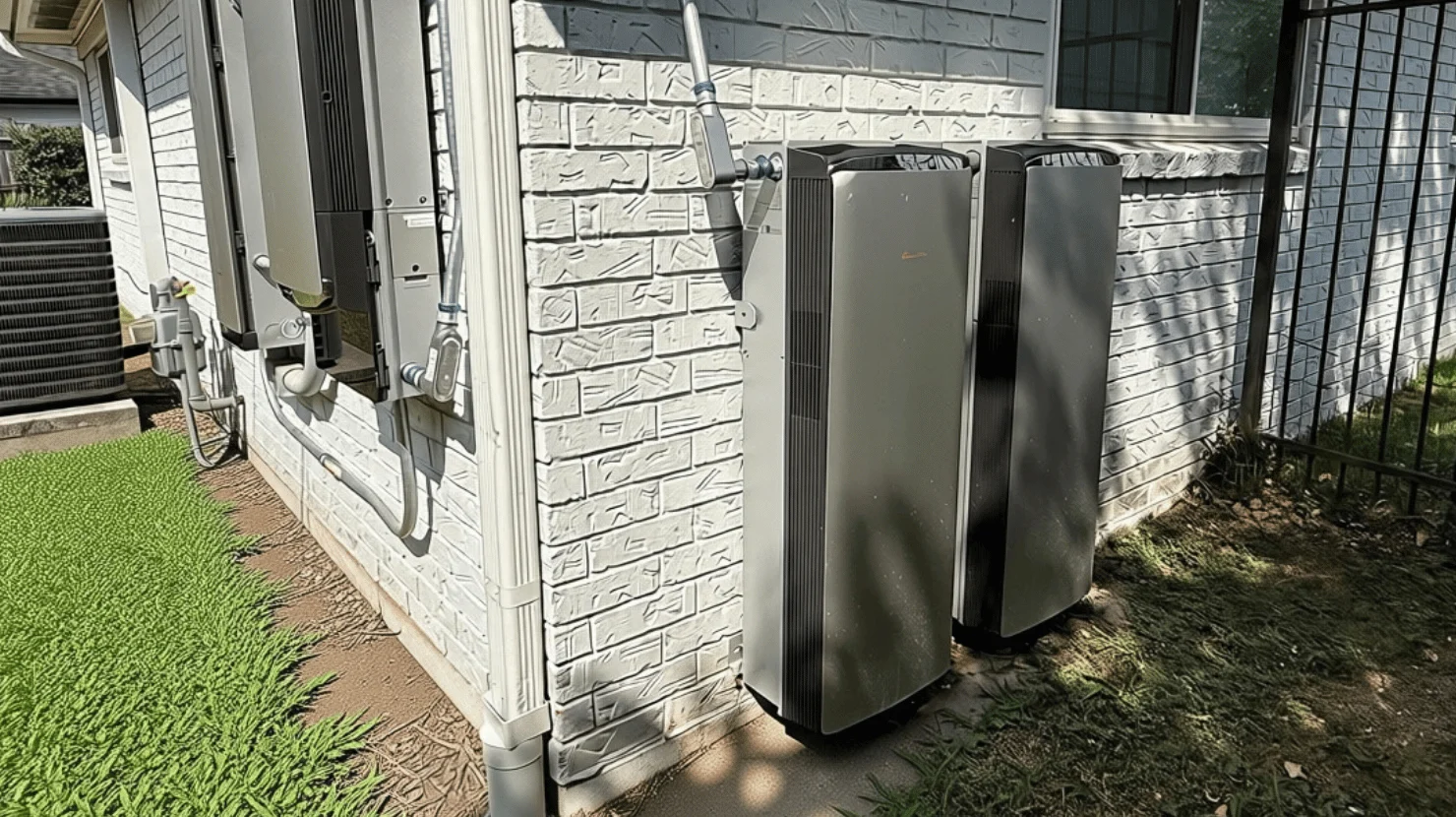
Compare Home Battery Backup Systems: Base vs. Energywell vs. Octopus vs. Tesla
Want to know the technical details of the batteries included in your home battery backup subscription? Compare details of Base vs. Energywell vs. Octopus vs. Tesla in the chart below:
| Energywell | Base Power | Octopus Energy | Tesla Electric | |
|---|---|---|---|---|
| Technology | EcoFlow OCEAN Pro Modular Battery System | Proprietary Base Core LFP Battery System | Lunar Energy | Tesla Powerwall 3 |
| Battery Size* | 20 kWh or 40 kWh Based on assessment of space at your home. | 25, 39.2 and 50 kWh Based on assessment of space at your home | 30 kWh | 27 kWh (2 Batteries) |
| Inverter Size | 24kW | 11kW | 11kW | 11kW |
| Deposit** | $99 refundable reservation fee (currently waived) | $50 refundable deposit | None | None |
| Installation Fee | $0 | $695 (single battery) | $0 | $100 |
| Battery Contract Term | 15 years | 12 years | 10 years | 12 years |
| Recharge Port? | Included | Included in 39.2 kWh Base Core; Additional $1000 charge for 25 and 50 kWh set-up | Unknown | No |
| Uninstall Fee | $1000 | $500 | $1000 | Varies |
| Monthly Fee | $19/month | $19/month | $45/month | $35/month + 3% annual escalator |
| Energy Rate*** | 4.2¢/kWh | 7.7¢/kWh | 8¢/kWh | 8¢/kWh |
| Energy Rate Contract Term | 1 year | 3 years | 3 years | 1 year |
| Availability | All Texas Deregulated Markets | All Texas Deregulated Markets | Houston & Dallas only; waitlist for enrollment | All Texas Deregulated Markets |
*BATTERY SIZE: Your installation depends on your home’s available space, electrical panel and meter location. Sizes listed are current maximum installation size available.
**DEPOSIT: Base $50 deposit, deducted from your installation fee; refundable until your home photos are approved and permitting begins. Energywell one-time $99 fee is credited back to you after your battery system is installed and you pay your first Energywell electricity bill. If Energywell determines your property does not qualify for the installation, the $99 deposit is refunded to your original payment.
***ENERGY RATE: Rate as of 11/5/2026
Bottom Line: Which Home Battery Backup System Should I Pick?
Base Power gets all the attention, since they were the first home battery backup system introduced in Texas. They’re Texas-based and their Core 39.2 kWh battery is manufactured in Austin. It’s a great product and you can’t go wrong with this choice. However, lesser-known Energywell is our recommendation thanks to $0 installation cost, a low energy rate and the power of their EcoFlow Ocean Pro battery installation. Regardless of whether it’s a 20 kWh or 40 kWh battery system, you’ll get a 24kW inverter, giving you simultaneous starting power for HVAC and your other appliances.
Frequently Asked Questions – Battery Backup for Home
A typical 20-25 kWh setup can run essentials (lights, refrigerator and wifi) for 12-24 hours. Adding HVAC, even at reduced usage, will cut your battery operating time. How long a battery backup will run your home depends on the size of your battery, its charge at the time of the outage, and how much power you use.
Yes, a home battery backup system can operate your HVAC system. HVAC systems take 3-4X the starting power as they need for running power. If your HVAC system is older or larger than typical, you may need a soft start installed, to lower the starting power requirements. For example, the Energywell 20 kwh with 24 kW inverter can start and run a 2.5 ton HVAC without a soft start required.
Your battery agreement will typically state that you’ll have a minimum of 20% of the battery capacity available at all times. If a weather conditions are likely to cause an outage (such as an approaching hurricane or winter storm), most providers will charge batteries to 100% ahead of the storm. During an extended power outage, you can recharge your battery using a portable generator, if the battery has a connection port. Energywell includes a charging port with all battery installations, from 10 kWh to 40 kWh. Base includes the charging port with its Core 39.2 kWh battery; for their 25 and 50 kWh wall mount versions you may have to pay an additional $1000 fee for a charging port.
You get a low cost home battery backup system. The retail electricity provider gets a location for a battery storage “grid asset.” The REP will make money off your battery in three ways. First, you’re part of a battery network for them. They’ll discharge your battery to the grid as part of a virtual power plant (VPP) under ERCOT’s Aggregated Distributed Energy Resource (ADER). Second, they can arbitrage the power, selling it directly on to the grid when same-day power prices are high. Third, they’ll charge the battery when power prices are low, and use that to power your home to cut their costs.
Your battery backup + energy contract agreement is transferrable to the new home owner. This should be discussed with your realtor and the buyer. If they choose not to keep the battery, you would be responsible for paying the deinstallation fee. Read your battery lease agreement for full details.
If you have home solar and want a battery backup, we recommend looking into standard purchase or leasing options. The battery backup + energy option requires that the Retail Electricity Provider retains control of the battery charge and discharge. You won’t be able to charge the battery during the day and use that power at night, which is what you need with a solar + battery system. Only Base Energy lets you bring-your-own-solar to the battery + energy agreement. They’ll pay you 4¢ per kWh for solar buyback whether it charges the battery or goes back to the grid. Contact them directly for details on this arrangement, as there’s additional paperwork and connection costs beyond the standard battery + energy option.
Additional Resources
Options for Home Backup Power
Portable Generator for Backup Power
Home Batteries: What it runs for how long
Power Outage Resources
Managing Your Utilities in a Hurricane
